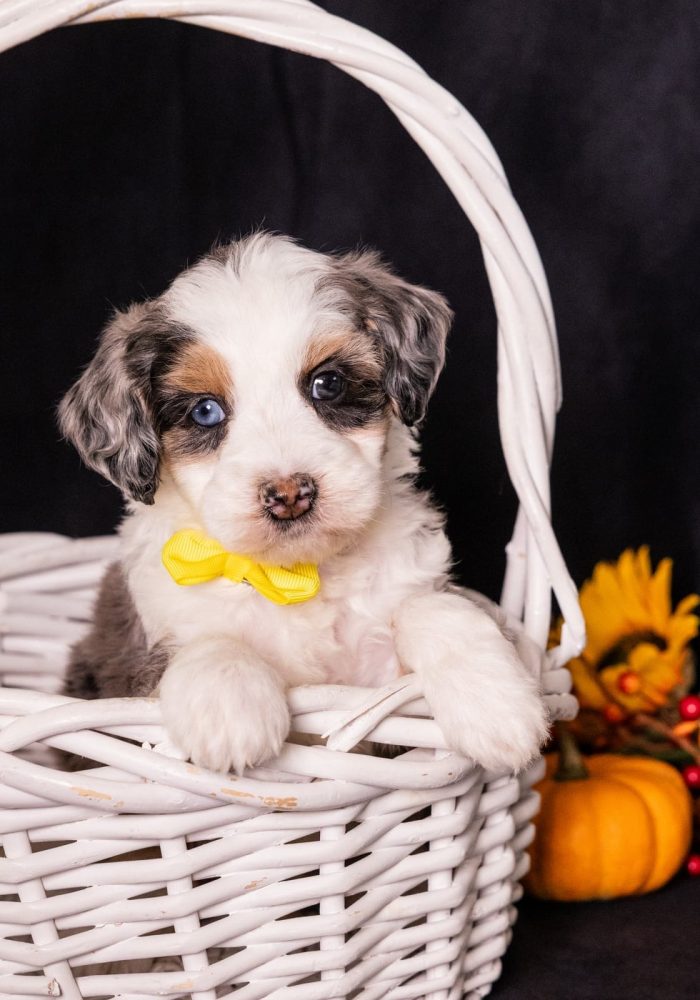
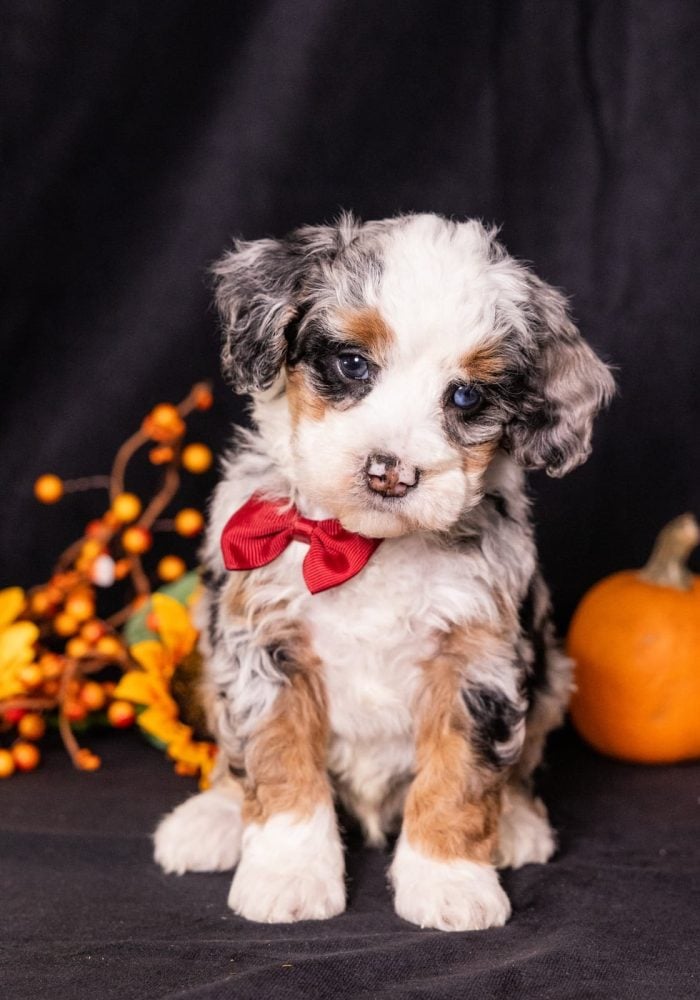
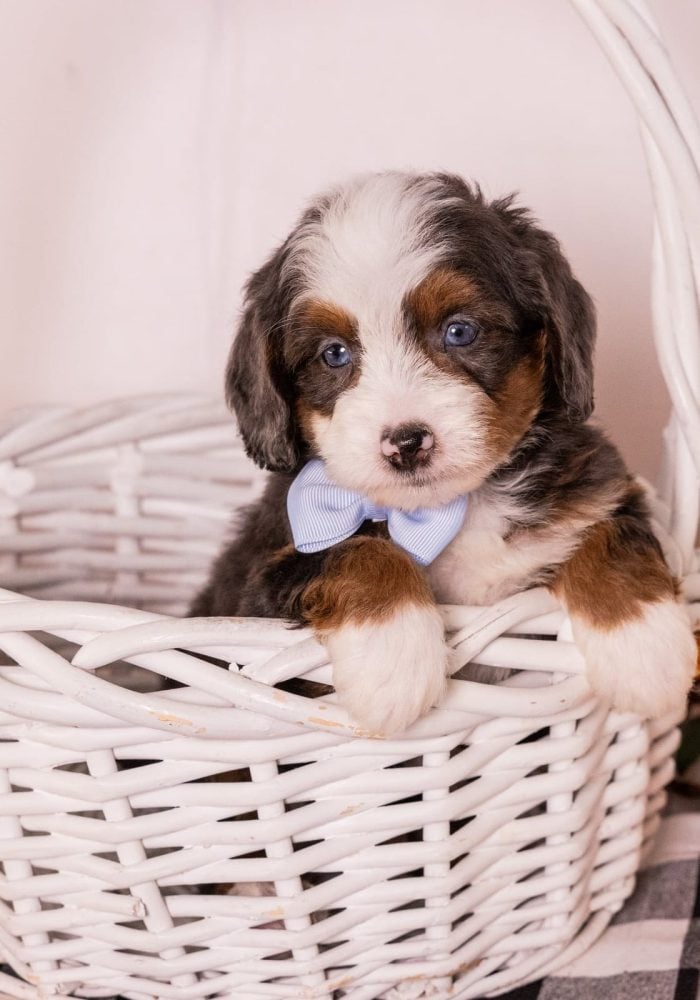
The Merle Mini Bernedoodle: A Coat That Tells Its Own Story
Written By Paw Tale Puppies Sep 14th, 2026
Every litter has a puppy that stops you mid-sentence. For us, it’s almost always the merle. That marbled, watercolor-splashed coat looks like it was painted on by hand — no two patches ever fall the same way twice. If you’ve been searching for a merle mini bernedoodle, you already know the pull. Let’s talk about what that coat actually means, because there’s more to it than a pretty pattern.
This post kicks off a series we’ve been wanting to write for a while: a color-by-color look at Mini Bernedoodle coats. We’re starting with merle because it’s the one we get the most questions about — and honestly, the one with the most misinformation floating around. Once we’ve worked through each color on its own, we’ll bring it all together in one master guide.
What Does It Mean for a Bernedoodle to Have a Merle Coat?
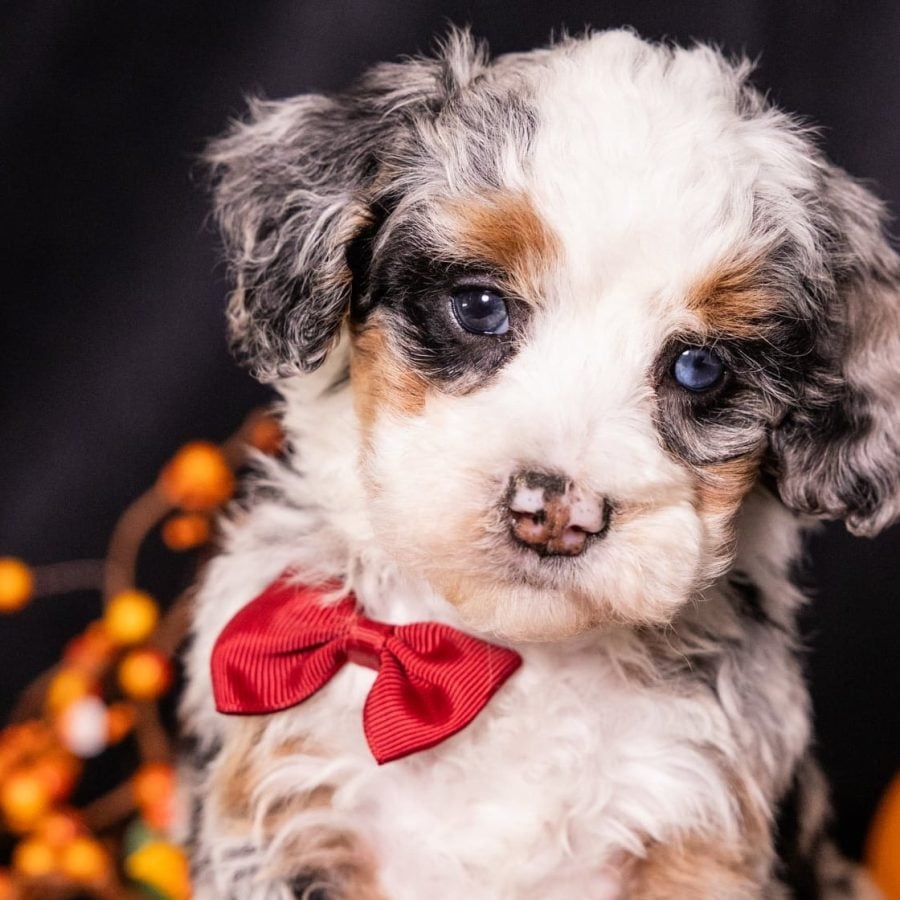
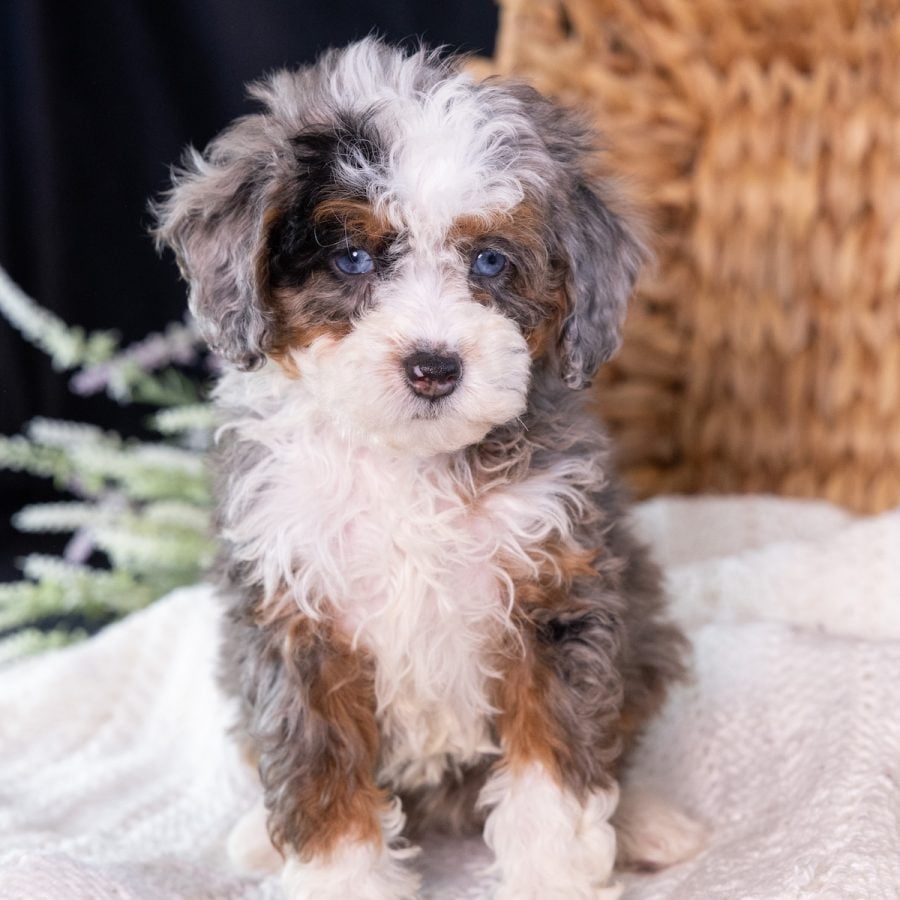
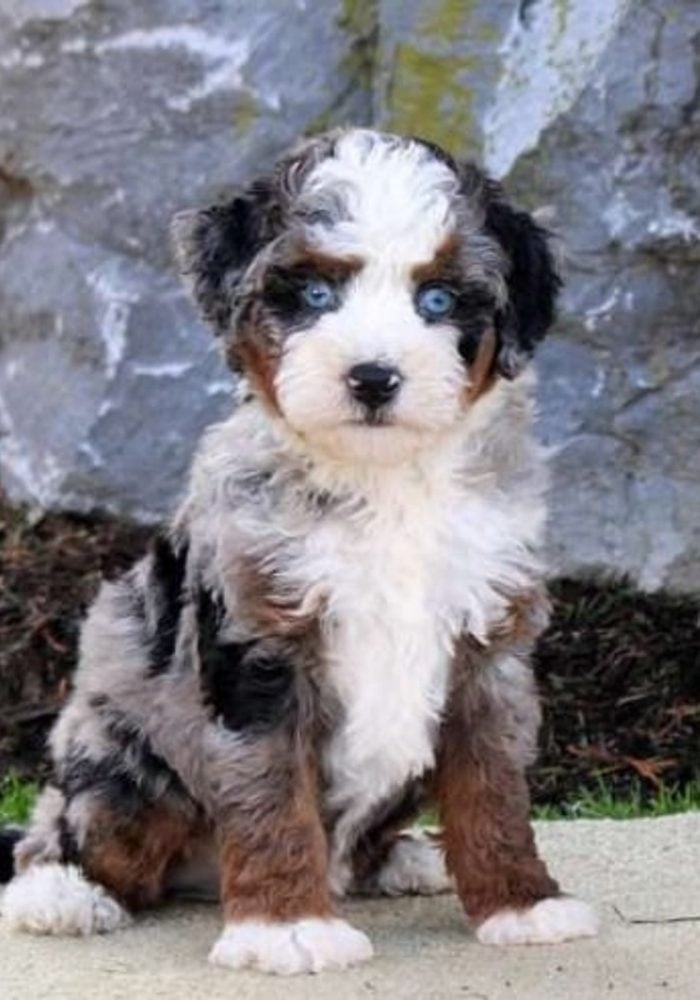
Merle isn’t a color — it’s a pattern. Genetically, it’s caused by the M locus gene, which dilutes random patches of the coat’s base color while leaving other patches at full strength. The result is that mottled, dappled look: swirls of lighter and darker tone scattered unevenly across the body, often paired with striking blue or partially blue eyes.
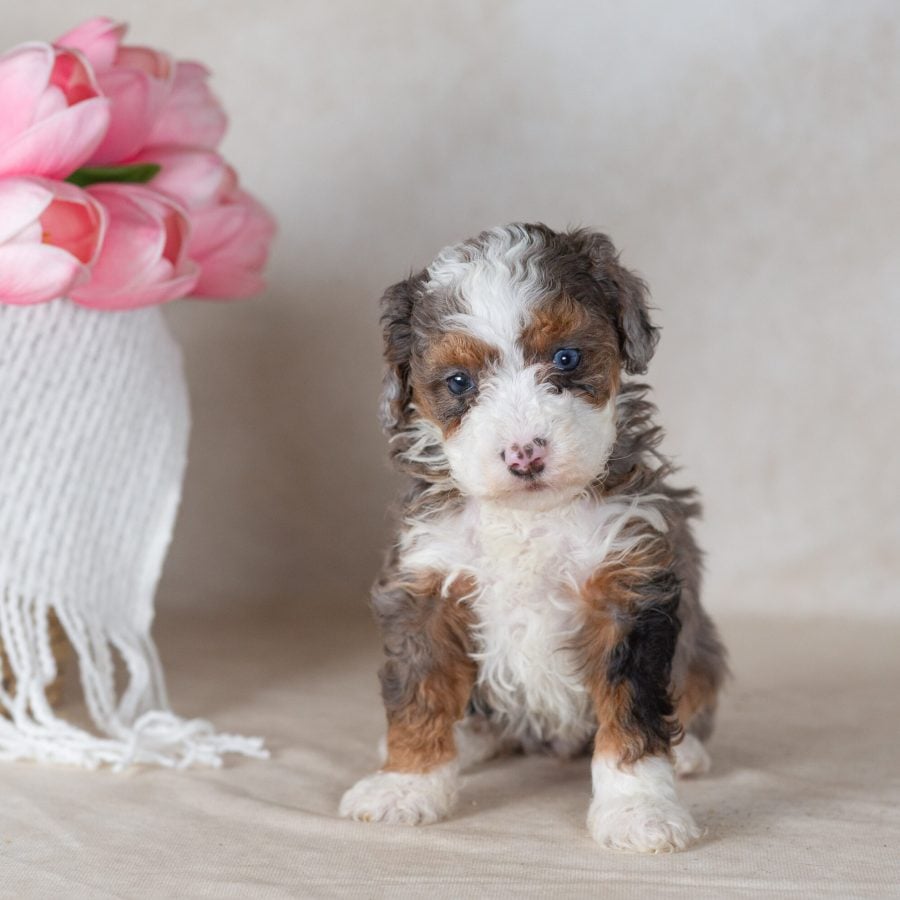
In a Mini Bernedoodle, merle shows up on top of whatever base coloring the dog already carries from its Bernese Mountain Dog and Poodle heritage — so you’ll see tri-color merles, phantom merles, and merles layered over sable or black, each one landing a little differently depending on the individual dog.
Single Merle vs. Double Merle — and Why Double Merle Is Dangerous
This is the part every serious breeder wishes more people understood before they go looking for “the most merle” puppy possible.
A single merle carrier has one copy of the merle gene (Mm). This is the healthy, standard way merle should be bred — one merle parent paired with a non-merle parent. The result is puppies with the classic merle pattern and no added health risk tied to the gene itself.
A double merle happens when two merle-carrying dogs are bred together, giving a puppy two copies of the merle gene (MM). This is where things get serious. Double merles are prone to significant vision and hearing impairments — including deafness and blindness — because the same gene responsible for that dramatic coat dilution also affects pigment-dependent development in the eyes and inner ear. A double merle often has a mostly white coat with little of the marbling that makes merle so recognizable in the first place.
Responsible breeding programs will never intentionally pair two merles together. If you ever come across puppies advertised as “double merle” or notice a listing where both parents are merle, that’s a red flag worth walking away from — not a bonus feature.
Why Are Merles So Popular?
A few reasons, and honestly, they all make sense to us:
No two are alike. With merle, every puppy’s pattern is its own — there’s a real sense of getting something one-of-a-kind. The eyes. Merle is one of the few patterns that can produce blue or partially blue eyes, which people tend to fall for instantly. It photographs beautifully. Between the coat and the eyes, merle Mini Bernedoodles are made for the kind of photos that stop people scrolling. Rarity within the breed. Merle isn’t the most common pattern you’ll see in a Bernedoodle litter, so when it shows up, it tends to get noticed.
Does Merle Impact Temperament?
Not on its own. Coat color and pattern are cosmetic traits — they come from a completely separate set of genes than the ones that shape temperament. A merle Mini Bernedoodle puppy is going to carry the same blend of Bernese Mountain Dog warmth and Poodle intelligence as any of its littermates, merle or not.
That said, if a merle puppy happens to also have significant vision or hearing differences (more common in double merles, as covered above), that can shape how the dog experiences and responds to its environment — not because merle changes personality, but because sensory limitations change how a dog has to navigate the world. This is one more reason single-merle breeding matters.
The Variations of Merle
Merle isn’t one look — it’s a whole spectrum. Here’s what we typically see:
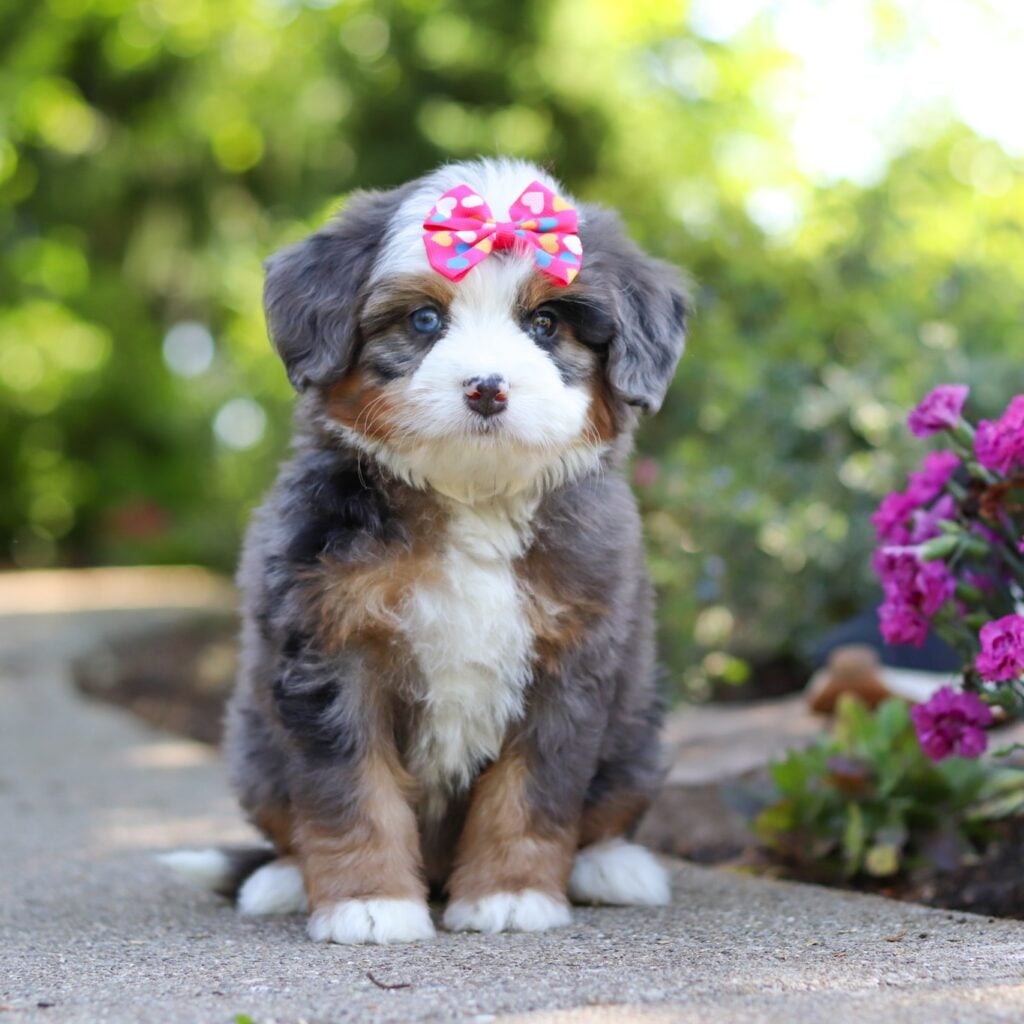
Blue Merle — merle laid over a black base coat, producing that classic gray-blue marbled effect.
Red Merle — merle over a red or liver base, giving a warmer, rust-toned pattern instead of gray.
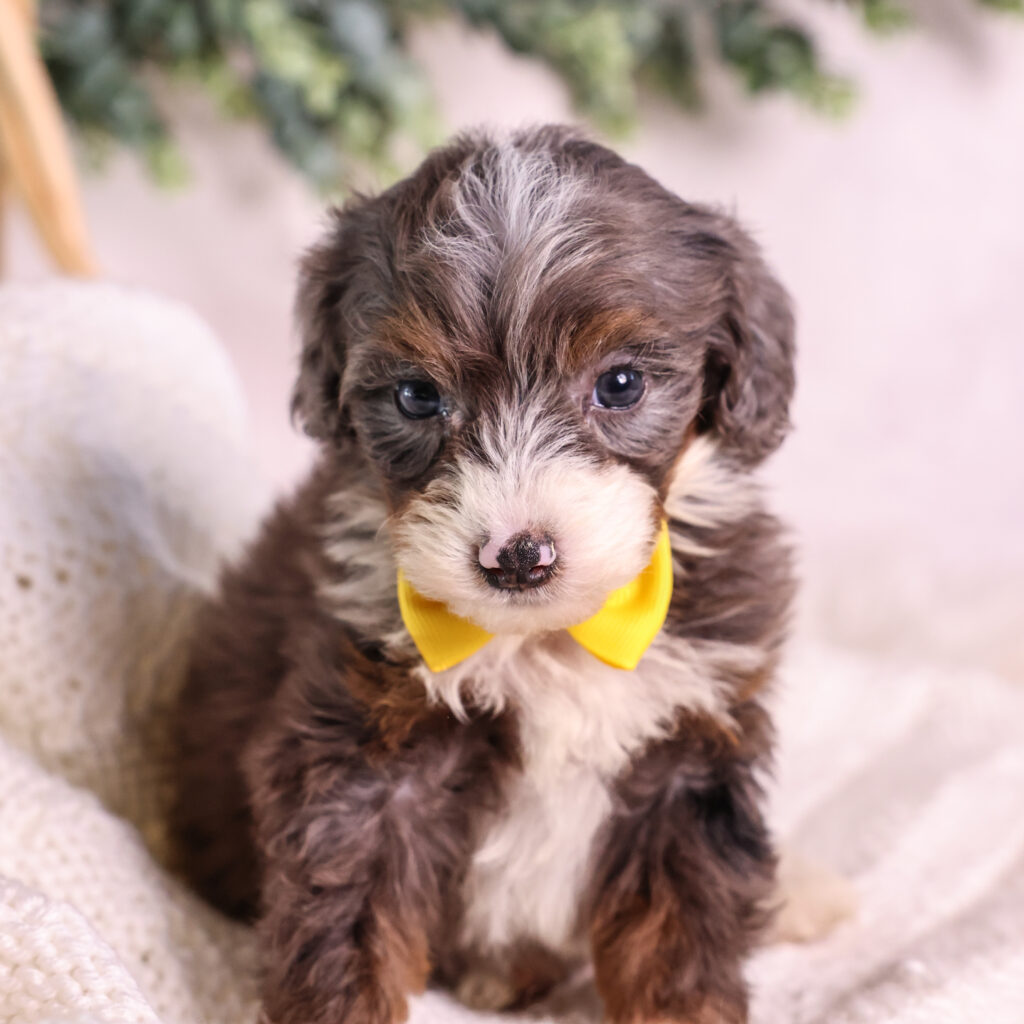
Chocolate Merle — merle laid over a chocolate/brown base coat, producing warm brown patches marbled with lighter caramel or tan tones instead of the gray-blue of a classic blue merle.
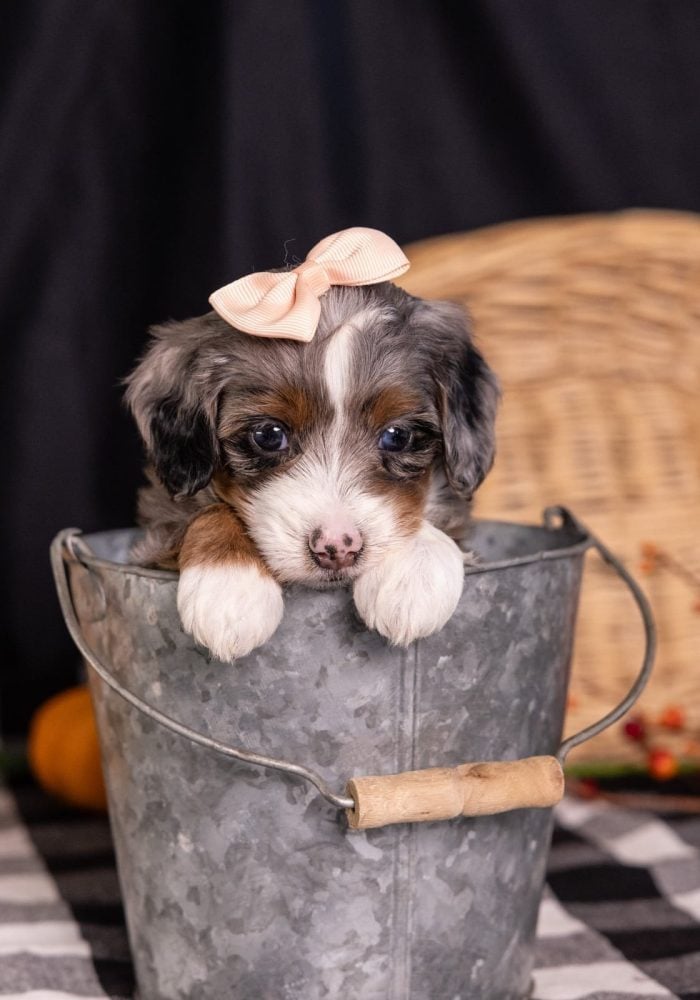
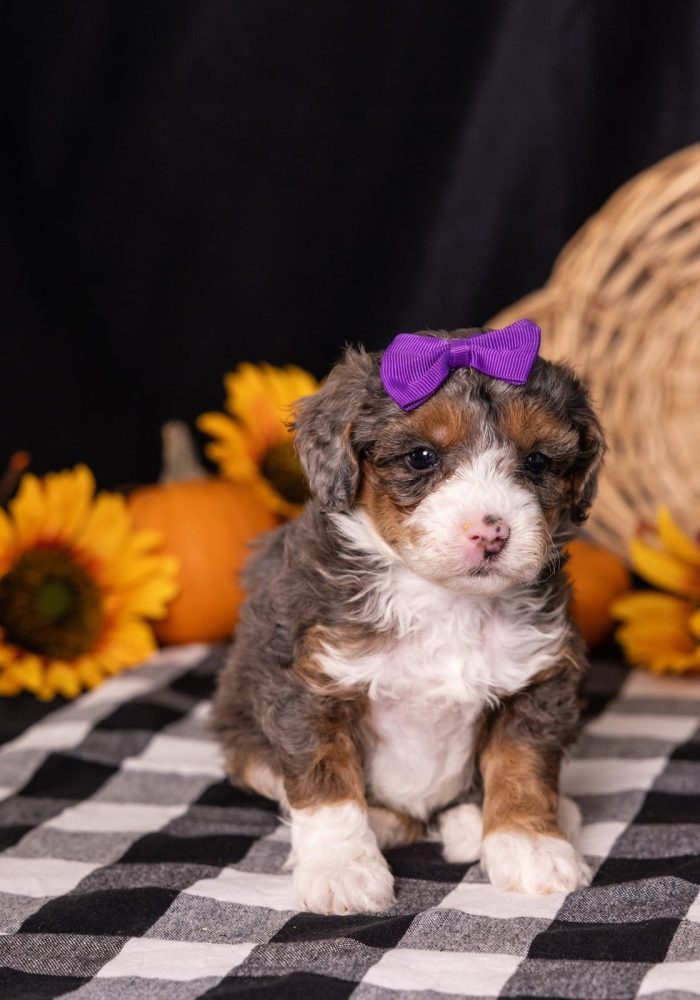
Tri-Color Merle — merle combined with the traditional tri-color markings (tan points, white trim), so you get the marbling and the classic pattern in one dog.
Phantom Merle — a merle puppy that carries hidden merle patches, sometimes only showing a small patch or two rather than an all-over pattern. These can be easy to miss without a genetic test.
Merle with Tan Points — merle base with tan accents around the face, chest, and legs, similar to the tri-color but without the white.
Every one of these can show up in a Mini Bernedoodle litter depending on what each parent carries, which is part of why merle litters are so much fun to watch grow — you genuinely don’t know exactly what you’re going to get until the coat starts to fully come in.
A Coat With a Story Behind It
That’s the tale of the merle — but it’s really just the first chapter. Next up in this series, we’re headed into the world of tri-color and phantom patterns, then sable, then merle’s quieter cousins: solid black, chocolate, and cream. By the end, we’ll pull every color into one master guide so you can see the full picture side by side.
If a merle Mini Bernedoodle has caught your eye, reach out — we’re always happy to talk through what a specific litter’s merle possibilities might look like.
FAQs About Micro Bernedoodle Breeders
Is a merle Mini Bernedoodle rarer than other coat colors?
Yes, generally. Merle depends on at least one parent carrying the gene, so it doesn’t show up in every litter. When it does, litter size for merle puppies specifically tends to be smaller than for more common colors.
Do merle Mini Bernedoodles cost more?
Often, yes. Rarity and demand both play into pricing, and merle’s popularity means these puppies frequently carry a premium over solid or standard tri-color littermates.
Can a merle Mini Bernedoodle’s coat change color as it grows?
The base pattern is set at birth, but the coat can shift in richness and clarity as puppy fluff gives way to adult coat — patches often look softer or more blended once the adult coat fully comes in.
How do I know if a puppy is a single merle and not a double merle?
A reputable breeder will always be able to tell you the merle status of both parents and, if needed, provide genetic testing results. If a breeder can’t or won’t answer that question directly, that’s worth pressing on before moving forward.
Written By: Paw Tale Puppies
Paw Tale Puppies brings years of dedicated experience in raising happy, healthy companion dogs. With a deep commitment to responsible breeding, they prioritize ethical practices, early socialization, and attentive care from day one. Their goal is to ensure each puppy is not only well-prepared for life in a loving home but also thoughtfully matched with the perfect family, creating lasting bonds built on trust and companionship.